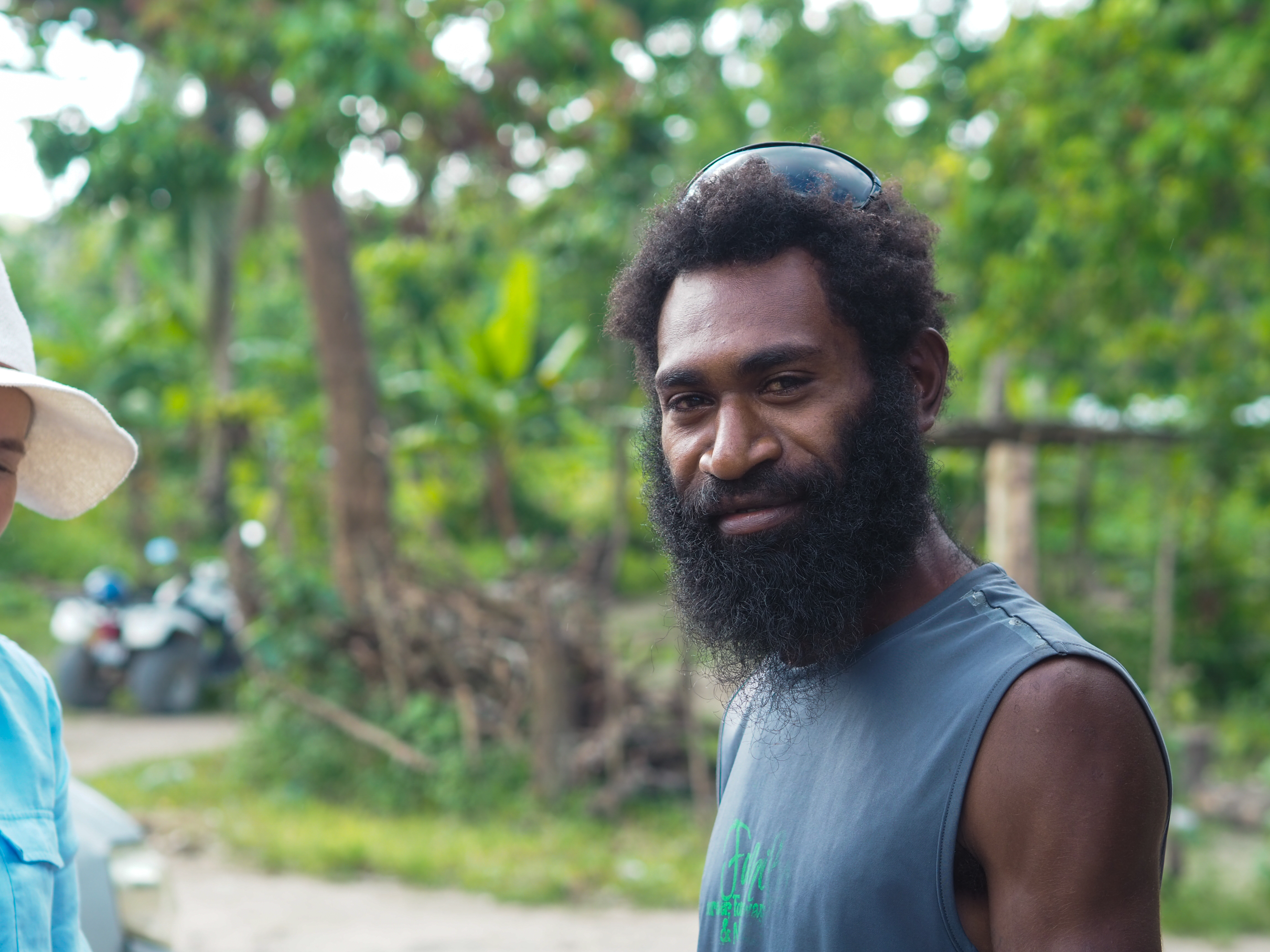
David lives by a lagoon in Vanuatu.
He swam in those waters as a boy. He fished with his family. He watched the mangroves sway in the wind off the bay. The lagoon was his playground. His pantry. His home. He is still here. The lagoon is still here. But a lot has changed. David grew up on Efate Island, on the edge of a wide stretch of water called Emten Lagoon. When he was small, the lagoon was alive. Mangroves grew thick along the shore. Fish moved in silver lines under the surface.
Children jumped from the bank on hot afternoons. The grandparents watched from chairs in the shade. “When I was a little kid,” David says, “the lagoon was filled with mangroves and so much life. Now, we no longer have those things.”
The village he is from is called Erakor Bridge. It sits low to the water. About 200 people call it home. The houses are close together. The ground is wet most of the year. The water table sits just below the soil, sometimes only half a metre down. When the rain comes hard, the soil fills up like a sponge. For a long time, this was just how things were. The village lived with it. The lagoon stayed clean enough. Life went on.
When I was a little kid, the lagoon was filled with mangroves and so much life. Now, we no longer have those things.
Then the rain changes
The rain is heavier now. The storms come closer together. The seasons feel different to the elders. The children are growing up in a different climate to the one their parents knew. Scientists say rainfall here will rise by nearly nine millimetres a day by 2030. For David’s village, that change is already arriving. And here is the problem. The village has never had a public toilet. The houses use small pit toilets in the back garden, the kind that work fine in dry country. But here, with the water table this close to the surface, the pits flood every time the rain comes hard. The contents spill into the soil. The soil drains into the lagoon.
Bit by bit, the lagoon got sick. The fish became unsafe to eat. The children were told not to swim. The lab results showed bacteria far above the safe limit. A place that had fed and held the village for generations was now a place to keep the children away from.
For David, this is more than a problem to solve. It is the slow loss of a place he loves.
A different kind of conversation
In 2020, David started talking to our team about it. He did not ask for a toilet. He asked for a conversation. About the lagoon. About the storms. About what might be possible. Our engineer, Steve, listened. Then they started a plan together. Not a one-week visit. Not a quick fix. A long project, with the village leading every step. The kind of work that takes years before anything is built.
He did not ask for a toilet. He asked for a conversation.
Through 2021, our team ran workshops in the village. They sat down with families about what they wanted. They sat down with the Ministry of Health about the national rules. They sat down with the Vanuatu Society for People with Disability about a neighbour in a wheelchair, and what he would need so the new toilet worked for him too.
Nobody was left out of the conversation. Not the elders. Not the children. Not the man who uses a wheelchair. This is how good engineering starts. With the people who have to live with the answer.
What gets built
By October 2022, the community toilet is in. It sits beside the village hall. It is raised more than a metre off the ground, well above the flood line. It does not pour into the soil. It does not leak into the lagoon. The waste goes into sealed pits, above water level, where it dries safely over months and turns, slowly, into something that can feed a garden. There is a tank to catch rainwater, which flows to a tap for washing hands.
A community toilet is not a small thing. A small ceremony marked the launch. The Ministry of Health was there. The local school was there. The Vanuatu Society for People with Disability was there. So was David. “This is the first of its kind in my community,” he said that day. “I am so proud.”
Houses fell. Trees fell. The toilet stands.
Four months later, the storms came. Cyclone Judy hit first, in February 2023. Cyclone Kevin followed early March. Two cyclones, back to back, slamming the same coastline. Vanuatu had not seen a season like it in years. Trees came down across the island. Roofs lifted. Homes flooded. Whole streets filled with debris. When the wind quieted and the village came outside, the toilet was still standing. Houses fell. Trees fell. The toilet stood.
It is a small thing. It is also everything. It is proof that the design holds. That the years of patient listening worked. That when you build with the village, in the village, for the village, the thing you build can take what the weather brings. This matters more every year. The storms are getting bigger. The water is getting higher. A toilet that survives one cyclone has to be a toilet that survives the next one too. And the one after that. The toilet is still standing today.
What comes next
The work is not done. There is a village committee that looks after the toilet. They keep it clean. They add sawdust. When a pit is full, our team will help them empty it safely and turn the rest into compost for the gardens. We will be in the village for the next two years at least, watching closely. Learning what works. Learning what to change.
We have started on the next step, smaller cheaper versions of the community toilet: a smaller, cheaper version of the toilet that families can build at home. One toilet by the village hall is a start. The dream is one for every household. “We are looking forward to keeping at it,” David says, “so that every house can have this.” Every. Single. House.
We are looking forward to keeping at it, so that every house can have this.
When the lagoon heals the children will swim there again. The mangroves will come back. That is what your kindness builds. Not just a toilet. A village that can take a storm and still stand. A lagoon worth swimming in again. A home worth staying for.
Thank you for standing with David.
You can support urgently needed projects just like this by making a donation today.
EWB Australia’s overseas work receives support from the Australian Government through the Australian NGO Cooperation Program (ANCP). Every donation you make to this project is combined with this government funding to reach even more people in more communities.
WASH
SANITATION
VANUATU
CLIMATE RESILIENCE
DISABILITY INCLUSION